Showing posts with label animal cruelty. Show all posts

Sunday, 22 October 2017

Should the fox hunting ban be lifted? [UK]

Fox hunting was banned in England and Wales in 2005 under the Hunting Act (2004) after already being banned in Scotland in 2002. Fox hunting first came around in the 1600s and was originally used as 'pest-control' to help reduce the number of livestock being killed by foxes. It is now considered by some as a traditional sport, although there  was a time when bear and bull baiting were as well. According to the RSPCA, 70-80% of UK residents support the ban, however, a YouGov poll in 2015 suggested that only 51% did. 

The Hunting Act 2004
Originally the ban was thought to be a simple and inexpensive way for politicians to gain popularity. However, it resulted in a drawn out process which cost the government over a million pounds and is thought to have had very little impact on animal welfare. Hunters on the other hand feel that it has outlawed a grand rural tradition and has somewhat confusing guidelines. The Telegraph claimed that 'The circumstances in which a fox could be killed were so confused that prosecutions have been thin on the ground.' Foxes can still legally be trapped or snared but must only be caught using these methods so that they can then be shot. It is legal to use two dogs to chase a fox out of hiding so that it can be shot but a pack of dogs can be used to flush the fox towards a bird of prey. Hunters will admit that some dogs may attack without an order but it is incredibly difficult to prove whether it was accidental or not. Most will admit that the law is confusing and needs to be improved for both sides. Tony Blair described fox hunting as 'banned but not quite banned at the same time'. 

Does the hunt have a purpose?
Many of the foxes that were caught by hounds were either cubs or weaker foxes which were less likely to survive. Hunters will argue that it allowed the weaker foxes to be culled and the stronger ones to survive, creating a healthier population. The hunt is supposedly used keep down the number of foxes in the area, however, research has shown that when a fox dies another fox will just take over that territory, meaning the population numbers will usually stay around the same. While some people claim foxes are a nuisance for killing livestock, a study that took place in Scotland suggested that foxes only account for 1% of lamb losses (but only two farms were used for this study). During hunting, it has been known for the hounds to kill livestock or pets. Foxes also benefit farms by killing rabbits which feed on crops. A study in 2003 estimated that this saves us £7 million a year. 

Is it cruel?
Before the ban, it was estimated that hunting resulted in the deaths of 20,000 foxes per year. This sounds like a lot, however, around 100,000 are killed every year just from road accidents. The same number of foxes can still be killed even after the hunting ban as it is still legal to shoot them. Many animal-rights activists will argue that this is a quicker and less cruel way to kill the foxes. In many cases this may be true, however if a fox is only injured by a gunshot then it can suffer for hours or even days before dying whereas they will usually be killed by dogs within seconds. The use of dogs is often seen as torturous as they will rip the foxes apart. As cruel as this may seem, this happens everyday naturally in the wild between other species. Foxes themselves will kill other animals such as rabbits and chickens, which will not die particularly quickly either. On the other hand, hunters have been accused of employing staff to block up any holes or escape routes before the hunt. This gives the fox an extremely unfair disadvantage and could be seen as the same principle as live feeding. 

The treatment of hounds
The other main cruelty accused in fox hunting is the treatment of the hounds. Dogs can also face severe injury during hunting as some foxes may fight back. It has also been claimed that any unwanted dogs will be disposed of.  Lynn Sawyer, an ex-hunter, claimed that it is 'normal' for dogs to be shot and then incinerated when they are not strong enough to hunt. She stated that she knew some dogs were even clubbed to death. Another ex-hunter, Clifford Pellow, said that there was a common use of negative reinforcement such as whipping and any dogs that did not turn out savage enough would be disposed of. Dogs that are kept closely in packs are more likely to spread disease amongst themselves.

Has the ban had any benefit?
Hunters have admitted that foxes are still killed by hounds while flushing them out, but claim that this only happens accidentally when the hounds attack without being ordered to. In May 2015 the League Against Cruel Sports found 16 fox cubs being held captive for hunting and in December later that year rescued another fox being kept ready for a hunt. This shows that, despite being illegal, the practice still continues and it is not uncommon for them to capture the foxes in advance for an easy hunt. Paul Tillsley (head of investigations for LACS) said that they have been covertly recording illegal hunts taking place and passing the evidence on to the police. In his experience he claimed that 'when hunts think they are not being watched, they get on as they always have done'. 

More Information:

Sunday, 18 June 2017

Animal Testing - Household Products [UK]

Household Products
Household products include items such as washing up liquid, polish and air fresheners. On the 1st October 2015, the government implemented a ban on the testing of household products on animals. However, animals had not been used in the UK in this way since 2010 as it is usually the chemicals being tested, not the product as a whole. The government also included a 'qualified ban' for testing ingredients, where any ingredient expected to make up at least 50% of the final product can not be tested. All other ingredients and any chemicals that require testing under legislation such as REACH are still allowed. In addition to this, products that have been tested on animals abroad may still be imported. PETA described this new legislation as a 'step in the right direction' however the RSPCA believed 'it'll make little difference to animal welfare'. Since thousands of ingredients have already been tested and proved as safe, these will not need to be tested again. Testing of ingredients in household products is still allowed, despite cosmetic testing being banned, as substances used in these products (such as bleach) are more hazardous to consumers and the environment. They are also more likely to end up in the environment in larger quantities (bleach put down toilets, air fresheners in atmosphere etc). It is often questioned why new testing needs to be carried out when there are thousands of ingredients already proven to be safe. However, new ingredients still need to be tested as an attempt to find safer, less environmentally damaging chemicals. 

More Information:


Saturday, 25 March 2017

Bear Bile Farms [China]

Bear bile farm
http://www.sickchirpse.com/chinese-bear-bile-farming/4/
Uses
Bile is a fluid made by the liver and stored in the gallbladder to help aid digestion. It has been used as an ingredient in traditional Asian medicines for thousands of years. The fluid contains high levels of ursodexoycholic acid (UDCA) which has been proven to be effective at treating liver and gallbladder issues. Bear bile is also used as a treatment for fever, heart disease, headaches and cancer, however, there is no evidence to suggest it is effective in treating these problems. There are currently thought to be about 12,000 bears in bile farms across China, Korea, and Laos. 10,000 of which can be found in China alone. There are a number of methods of bile extraction, but all are described as painful and invasive by animal rights activists. This has been disputed by the head of the Chinese Association of Traditional Chinese Medicine (2012), Fang Shuting, who described the process as 'natural, easy and without pain' and thought that it 'might even be a very comfortable process'. This seems unlikely however, as these bears have catheters or tubes inserted into their gallbladder, some of which are left in permanently. Some bears have holes made in their abdomen and gallbladder, and are then left to allow the bile to drip out. These bears have been seen to display a number of unnatural behaviours associated with severe stress, such as self mutilation and voluntary starvation, and often contract diseases and infection from poor sanitation. It is very rarely disputed that the conditions endured by these bears is horrific and incredibly cruel. 

Purpose
While bear bile farms have been outlawed in countries such as Vietnam, it is still legal and defended by the government, in countries such as China. They claim bear bile farms are an effective way of conserving bear species  by protecting them from poaching. The most commonly found bear in bile farms is the Asian black bear which is classed as vulnerable on the IUCN red list. Sun bears and brown bears are also used, the sun bear is classed as vulnerable while the brown bear is least concern. Prior to the 1980s, bears were hunted and killed for their bile. The bile was collected by removing the gallbladder from dead bears. The first bear farm opened in Korea in 1980 which allowed people to keep bears in cages and extract bile from the gallbladder throughout the bear's life without having to kill the bear. Fang Shuting, claimed that 'bear farming is the best way to protect wild bears' as the market demand was too great to be supported by the wild bear population. Chinese government officials say that without bile farms, an additional 10,000 wild bears would be killed per year. Chris Shepard from the conservation group, Traffic, claimed that there are over 50 alternatives to bear bile available but practitioners are reluctant to use them. 
Bear in bile farm
http://www.mhsuk.com/charity/

Does it help to conserve bears?
The Chinese government claimed that bear bile farms would have a positive impact on the conservation of these bear species as the farms would eliminate the necessity of poaching wild bears. In addition to this, more bile can be extracted throughout the life of a farm bear, than killing a bear in the wild. Many say this hasn't worked as, despite being illegal, it is still cheaper and easier to take bears from the wild than set up a breeding programme within the farm. Jill Robinson, head of Animals Asia, found that within a bear bile farm approximately 30% of bears had 'wounds indicating that they were wild caught'. Breeding bears in captivity involves the additional cost of maintaining denning pens for the bears to breed and providing extra food for the females during pregnancy. Instead, many farms have been accused of keeping bears individually, in cages too small for them to move, underfeeding them, and not providing sufficient water. Many consumers of traditional medicine view bile from the wild as preferable due to its natural appeal, seeming more authentic, and low levels of sanitation seen in bile farms. According to The Guardian 'no countries have shown that farms enhance bear conservation'.  In fact, it has been shown that numbers continue to fall due to habitat destruction and illegal poaching. Since this practice is legal in China, it has also allowed bear bile to be more readily available, and is now being used in more products. In 2012 the IUCN called for the phasing out of bear farms due to a lack of evidence that these farms have helped to lessen the effect of poaching on the bear population.

Alternatives
In 2015, Kaibao Pharmaceuticals, a company that supplied about half of China's bear bile, claimed that it was going to invest the equivalent of £1.3 million into researching an alternative to bear bile. They claimed that this was going to be a poultry bile, likely sourced from poultry farms already present around the country. However, this seems unnecessary as there are already so many natural alternatives to bear bile that have been proven to be effective. Most farms are owned by pharmaceutical companies who will be reluctant to shut down when they supply thousands of jobs to workers and make huge amounts of money from bear bile. The Guardian estimated that Kaibao makes around £40 million a year in net sales from bear bile. In 2011, Animals Asia carried out a poll which suggested that 87% of the Chinese population disagrees with bear bile farming but alternatives need to be accepted by doctors before they replace bear bile in pharmaceuticals in China.


More Information:
http://news.nationalgeographic.com/2016/05/160505-asiatic-bear-bile-trade-laos/
https://www.theguardian.com/environment/radical-conservation/2015/apr/09/bear-bile-china-synthetic-alternative
https://www.animalsasia.org/uk/media/news/news-archive/five-things-you-need-to-know-about-bear-bile-farming.html


Friday, 11 November 2016

The Not-So-Grand National

The Aintree Grand National began in 1839 and has since become the largest annual horse race in Britain and arguably in Europe. Between 500 and 600 million people across 140 countries tune in each year to watch. The course is over 4 miles long and requires the 40 horses to make it over 30 jumps (14 twice and 2 once). The most famous of these jumps is Beecher's Brook which is described as both the most 'thrilling' and the most 'dangerous' jump in the world. 

Safety Measures

In the time that the Grand National has begun, a number of safety measurements have been put in place in an attempt to decrease the risk of injury to horses as well as jockeys. The Grand National is considered five times more deadly than any other horse race. Less than 40% have finished the race in the past 10 years and there have been at least 79 deaths in total. After the 2011 race resulted in the deaths of three horses, and jockey Peter Toole in a coma, two jumps were reduced in height. In addition to this, the landing ground of the first jump was levelled to reduce the risk of horses falling. However, Ginger McCain (jockey and horse trainer) stated that increasing safety in this way had inadvertently resulted in the race becoming more dangerous by enabling the horses to go faster. In 2013, further safety measures were implemented by using softer materials for the fences, a new bypass to catch riderless horses, reducing the length of the track, and more. Since 2013 no horses have died during the main Grand National race. 

Horse Welfare

Despite this, five horses died this year during other parts of the Grand National festival which takes place across three days. During  the main race a total of 16/39 horses made it across the finish line. This is less than the year before (2015) which ended with 19/39 horses finishing, and the year before that (2014) when 18/40 horses finished the race. This is a total of 44.9% finishing the race in the past 3 years. The highest number of horses to ever complete the Grand Nation was in 1984 when 23/40 horses finished. One horse named Earthstopper collapsed and died after finishing the race in fifth place, but no horses died due to falling injuries. 
Image result for grand national 2016
Metro 2016
Grand National
'Four horses dead in the first two days'


Horses will often be exhausted after racing; for example the winning horse in 2011, Ballabrigs, had to be given oxygen after the race. The rider, Jason Maguire, was given a 5 day ban for whipping too many times and causing physical injury to the hind leg, he still kept the winning title and £535,135 prize money. Many claim that horses do not feel the effect of the whip and are simply encouraged to run faster due to the sound of the crack. However, horses are in fact extremely sensitive to touch and can 'easily feel a fly landing on its skin' according to the RSPCA. This is demonstrated by the cutaneous trunci muscle reflex. 

In October 2011 the BHA instated stricter whipping regulations by increasing minimum punishment from a caution to a 5 day ban with increasing measures for repeat offenders. In addition to this, they decided to nearly half the number of times a horse can be whipped throughout the race. They also initiated mandatory financial penalties to any jockey who received a 3 day or more suspension. This would have cost Jason Maguire around £40,000 according to the BBC. The BHA refused to disqualify rule-breakers as this would also penalise the horse owners, trainers, stable staff and punters. Tim Morris of the BHA explained that the whip was still necessary and could not be banned as it is required to 'steer, correct its stride, and balance a horse'.


The 2014 Grand National saw the death of horse 'Our Conor' who was sold for 1 million euros the year before. Despite this, he was later describer as 'replaceable' by jockey Ruby Walsh. In an interview with Radio Times in 2013 Katie Walsh claimed that the race horses are cared for 'better than some children' but then later said 'these things happen and they're horses at the end of the day'. Every year thousands of horses are either discarded, or auctioned off to slaughterhouses as they no longer have a purpose when they can not race. Often it is not seen as a worthwhile investment to pay for vets bills, however, in 2011 The Guardian published an article explaining why a broken leg can indeed be fatal to a horse and can not always be treated. 


Health problems

Horses will usually begin their training around one and a half years old. By this time they are old enough to be sent to slaughter if they do not perform as expected. At this age their skeletal structure is still developing and putting a horse through extensive training during this time can lead to extensive damage, particularly to the spine and legs. 

During races, horses can be pushed to their physical limits, resulting in a number of health issues. A study carried out at the University of Melbourne found 50% of racehorses had blood in the windpipe and 90% had blood deeper in the lungs, also known as exercise-induced pulmonary hemorrhage (EHIP). Racing at such high speeds can cause horses to rupture blood vessels, sometimes resulting in a nosebleed. A study carried out in Sydney found stomach ulcers in 90% of race horses. 
Image result for crib biting
www.vetstream.com/equis/content/
disease/dis00067

Horses are natural grazers and therefore their stomachs are constantly producing hydrochloric acid for digestion. However, when horses are not turned out to pasture their stomachs are still producing the acid and digestive enzymes. Without any food in the stomach this can go on to damage the lining of the stomach, resulting in ulcers. Horses that spend more time grazing or are given hay/straw as feed in a stable are shown to be less prone to stomach ulcers.This shows horses should be able to carry out their natural behaviours for health reasons. Horses are social animals but are unfortunately too often kept for long periods of isolation in the racing industry. This can cause them to develop neurotic behaviours such as
crib biting, swaying or self mutilation. 


Conclusion

The Independent newspaper predicts that horse racing contributes around £3.45 billion to the economy and provides approximately 6,000 jobs to care for the 14,000 horses in training. In 2016, £250 million was predicted to be wagered on the Grand National. With such a large amount of money involved it is extremely unlikely that the government will ever decide that the Grand National is no longer an acceptable use of animals. However, as more information is revealed about the horse racing industry it is possible that people will decide to spend their money on a worthier cause. 

Wednesday, 17 February 2016

Trophy Hunting vs Factory Farming

A brief comparison

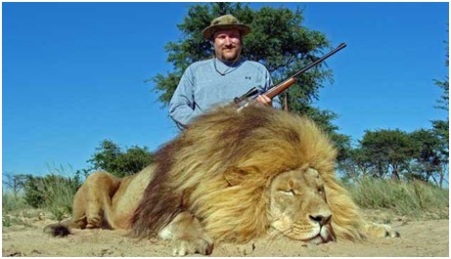
So often on social media I see friends who share posts degrading so called 'trophy hunting'. But why does this seem to be a bigger topic than the more common acts of animal cruelty carried out on a much larger scale? While thousands of exotic animals are hunted for sport each year, over a billion farm animals were killed in the UK alone in 2013, and worldwide it equals approximately 22 million animals every day. It doesn't stop at the number of deaths either, it seems the quality of life experienced by animals on a shooting range is far superior to any animal living in a factory farm. 

To recreate the hunting experience for punters, these animals are kept in their natural habitat with space to roam and express natural behaviours. Meanwhile, animals in factory farms are kept in dark, overcrowded sheds. Female cows spend their entire lives being forcefully impregnated to produce milk, while hens will often live in one shed with 125,000 other hens. Keeping 20,000 hens in one shed can even be classed as free range, providing they have occasional access to the outside.

Trophy hunting is known as such due to the way hunters will exhibit the animals they have killed. 
To shoot a zebra in a 'canned' hunting experience will cost you approximately £700, £10,000+ for a lion, and £35,000-£70,000 to shoot a rhino. After paying thousands of pounds these hunters will expect their moment of glory to be with a large, impressive animal. Breeders who wish to sell game to a hunting range will ensure that their animals are in top condition as this will increase their worth. However, when you are selling a £9 steak from a local pub, the customer will have no concern about the condition  of the animal before it was killed, cooked and served on a plate. They are not making such a large profit from this animal's life and will therefore spend less cash raising that animal for slaughter. 

Additional affects

Slaughterhouses do more than just house and slaughter animals. They are one of the largest causes of deforestation, pollution, and animal cruelty. Trophy hunting also does more harm than good, but the effects of housing billions of animals for food consumption has a much larger impact on the environment. Many people believe trophy hunting has a disastrous affect on endangered species without realising they are bred to be killed, just as farm animals are. In addition to this, their meat is nearly always used and is not wasted. These are not endangered animals being illegally poached. The addax antelope is an example of an animal which was near extinction but has been bred and kept alive by breeding for trophy hunting. 

I am in no way condoning hunting for sport, but we live in a society where we take it upon ourselves to judge other people before we look at ourselves. If you can condone the consumption of meat then surely you can not oppose the killing of the animal. Some people may believe that the cruelty of farms is necessary for food, however, in reality the enjoyment from consumption of meat is no more necessary than the thrill of hunting.