Showing posts with label cruelty. Show all posts

Thursday, 22 June 2017

Animal Testing - Pharmaceuticals [UK]

The UK regulations are considered some of the strictest animal testing regulations in the world. They are regulated by the Animal (Scientific Procedures) Act (1986) which was revised again in 2013. This act makes it illegal to use great apes such as gorillas and chimpanzees for testing, but the use of other primates is still legal. Animals such as dogs and primates are used the least due to the time and expense of keeping them in captivity. Rodents are used for about 80% of animal tests. Three licences must be obtained from the Home Office to carry out animal testing under the scientific procedures act. A project licence, personal licence, and an establishment licence. Each establishment must have appropriate accommodation and veterinary facilities to obtain a licence. The licence will specify which areas are suitable for certain procedures. For example some areas may be suitable specifically for dispatching animals after use, while other areas may only be used for certain types of testing. An establishment licence remains in force until it is revoked and should be reviewed annually. A personal licence is required by any person carrying out testing procedures. All researchers and technicians must have necessary training, skills and experience. They must carry out an accredited modular training course for each species being used and an additional course if they are going to carry out surgical procedures. The licence specifies where they can carry out procedures, the supervision in place, what types of procedures can be carried out and on which species. The licence remains in place indefinitely or until it is revoked, and is reviewed every 5 years. A project licence specifies the numbers and types of animals used, types of experiments carried out, purpose of the testing, and requires a certificate to confirm there are adequate facilities and staff for the procedures. A project licence can be issued for any length of time up to 5 years. After 5 years the holder must apply for a new licence. If the licence has been issued for less than 5 years the holder can apply to extend the licence up to 5 years. In 2015 approximately 570 project licences were granted and around 1400 inspections were carried out. 

Each project is also evaluated on the 3 R's:
Replacement: A project will only be granted a licence is there is no reasonable scientific alternative. They must prove that non-animal methods will not provide satisfactory or reliable results.
Reduction: They must use the smallest number of animals needed to give reliable results. It is the responsibility of the project licence holder to ensure there is no unnecessary or surplus breeding of animals. Procedures should not be carried out if there is data already available and sharing data should be encouraged to minimise the testing required. A project licence must justify any need for the duplication of tests (to confirm the accuracy of results). 
Refinement: Stress and pain must be reduced as much as possible in methods of testing, breeding, accommodation and care of the animals. Animals must be given pain relief where possible and when it will not disrupt the accuracy of results. Death should be avoided as an end-point when possible. A 'humane' end should be provided as soon as possible. 
Most animals will be euthanized after testing as they will be in too much pain and stress to justify keeping them alive. There are a few places that have been set up to rescue animals after lab testing, however, too many animals are used during testing to put them all up for adoption. Animals such as primates will have been born in captivity and can not be released into the wild. Often, the injuries and health problems sustained are so severe that it is kinder for them to be euthanized. 

More Information:

Sunday, 18 June 2017

Animal Testing - Household Products [UK]

Household Products
Household products include items such as washing up liquid, polish and air fresheners. On the 1st October 2015, the government implemented a ban on the testing of household products on animals. However, animals had not been used in the UK in this way since 2010 as it is usually the chemicals being tested, not the product as a whole. The government also included a 'qualified ban' for testing ingredients, where any ingredient expected to make up at least 50% of the final product can not be tested. All other ingredients and any chemicals that require testing under legislation such as REACH are still allowed. In addition to this, products that have been tested on animals abroad may still be imported. PETA described this new legislation as a 'step in the right direction' however the RSPCA believed 'it'll make little difference to animal welfare'. Since thousands of ingredients have already been tested and proved as safe, these will not need to be tested again. Testing of ingredients in household products is still allowed, despite cosmetic testing being banned, as substances used in these products (such as bleach) are more hazardous to consumers and the environment. They are also more likely to end up in the environment in larger quantities (bleach put down toilets, air fresheners in atmosphere etc). It is often questioned why new testing needs to be carried out when there are thousands of ingredients already proven to be safe. However, new ingredients still need to be tested as an attempt to find safer, less environmentally damaging chemicals. 

More Information:


Animal Testing - Cosmetics [UK]

Cosmetics
Cosmetic products are usually thought of as make up, however this also includes things such as shampoo, toothpaste and deodorant. In 2009 animal testing was banned for the use of cosmetic products in the EU. However, products could still be tested outside the EU then imported and sold in countries within it. This was changed in 2013 when new legislation was put in place to prevent the sale of cosmetic products, or products with ingredients that have been tested on animals, anywhere in the EU. Israel and India introduced similar legislation and India became the first country in Asia to ban animal testing for cosmetic products and their ingredients. Many people believe animal testing is now unnecessary as we already have thousands of products and ingredients that we know are safe. The RSPCA stated that 'there are more than enough cosmetic products available'. However, new chemicals can be tested under REACH (Regulation for Registration, Evaluation, Authorisation and Restriction of Chemicals). REACH is an EU regulation which carries out toxicity tests for chemicals on animals to ensure they are safe. New chemicals are required to be tested for the effect that they will have on workers who will be handling them and their environmental impact.They believe that hazardous chemicals can not be determined using only non-animal methods but require companies to share data so that the number of tests carried out will be limited. Although the products sold in the UK will not be tested on animals, products from the same company can be tested and sold outside the EU in countries such as USA and China, so some feel that buying from these companies is still indirectly funding animal testing. 

More Information:

Friday, 7 April 2017

Cavalier King Charles Spaniel (part 2)

Patella luxation
Patella luxation is a condition that involves repetitive dislocation of the patella (knee cap). It is seen in all types of dog but is most common in toy and miniature breeds of dog, such as the Cavalier King Charles Spaniel. It is also thought to be more common in females than males. Symptoms include abnormal movement in the hind limbs, lameness, skipping, and an abnormal posture while sitting. Clinical symptoms can be seen in dogs as early as four moths old. It is usually diagnosed during a physical examination from a veterinarian and is then confirmed by an x-ray. It is thought that it can lead to ruptured cranial cruciate ligament in 15-20% of cases. Dogs with intermittent or permanent lameness will be considered for surgery but most cases will be treated with pain killers, physiotherapy, and/or weight management. 

Keratoconjunctivitis sicca (KCS)
KCS (also known as dry-eye syndrome) is a disease that affects the precorneal tear film and prevents the production of moisture in the eye. It results in the inflammation of the cornea and tissues in the eye due to dryness. It is thought to affect around 1% of dogs. The Cavalier King Charles Spaniel is one of the breeds more commonly affected, along with breeds such as pugs and the English bulldog. Symptoms include redness and yellow/green discharge. If untreated it will eventually result in a cloudy film over the cornea and scarring around the eye. It can cause blurred vision, or loss of vision completely and causes the eyes to be more prone to infection. It can be diagnosed by a schirmer tear test which checks whether there is adequate tear production in the eye. KCS can not be cured and requires life long medication. Two commonly used medicines are cyclosporine and tacrolimus which must be administered in the eyes once or twice a day, every day. 

Syringomyelia
Syringomyelia MRI
http://cavalierhealth.org/syringomyelia.htm
Chiari-like malformation (CM) is a condition seen in cavaliers causing their brain to be too big for their skull. The back part of their skull puts pressure on the brain and some of the brain is squeezed out the back of the skull (foramen magnum). This is known as syringomyelia when the skull partially blocks the flow of cerebrospinal fluid from the brain, which is pushed through the central spinal canal. This causes a variation in pressure and creates fluid-filled cavities within the spinal cord, known as syrinx.
It is thought that this produces a pins-and-needles feeling around the head, neck and spine, while in severe cases it is thought to cause a burning sensation. Symptoms include being sensitive to touch, walking/moving slowly, problems jumping, scratching, phantom scratching, biting hind legs, or weakness in limbs. The symptoms seem to be worse during exercise, when excited, at night, and can even worsen due to changes in weather. It is thought that this is because of the changes in atmospheric pressure. It can be diagnosed by an MRI scan but there is no cure. Some dogs may have surgery to remove the back parts of the skull which are putting pressure on the brain. This will result in an improvement in about 80% of dogs, but 50% of these will have symptoms recurring within 2 years. In the most severe cases the dog will have to be euthanised as the condition is so painful. It is most commonly found in cavaliers and other toy breeds such as pugs, chihuahuas and yorkshire terriers. Symptoms will usually be seen after 2 years of age and a study showed that about 70% of cavaliers will have syringomyelia by the age of seven. It is a progressive illness which means it will get worse with time. It may end up destroying parts of the spinal cord, and the dog's legs will become progressively weaker. Some medications may be given to help limit the pain and reduce symptoms. Dogs with syringomyelia prefer to have their head elevated so keeping food and water bowls raised can help make them more comfortable. 

Video of cavalier with syringomyelia: 
https://www.youtube.com/watch?v=_UGp45LMCis

Saturday, 25 March 2017

Bear Bile Farms [China]

Bear bile farm
http://www.sickchirpse.com/chinese-bear-bile-farming/4/
Uses
Bile is a fluid made by the liver and stored in the gallbladder to help aid digestion. It has been used as an ingredient in traditional Asian medicines for thousands of years. The fluid contains high levels of ursodexoycholic acid (UDCA) which has been proven to be effective at treating liver and gallbladder issues. Bear bile is also used as a treatment for fever, heart disease, headaches and cancer, however, there is no evidence to suggest it is effective in treating these problems. There are currently thought to be about 12,000 bears in bile farms across China, Korea, and Laos. 10,000 of which can be found in China alone. There are a number of methods of bile extraction, but all are described as painful and invasive by animal rights activists. This has been disputed by the head of the Chinese Association of Traditional Chinese Medicine (2012), Fang Shuting, who described the process as 'natural, easy and without pain' and thought that it 'might even be a very comfortable process'. This seems unlikely however, as these bears have catheters or tubes inserted into their gallbladder, some of which are left in permanently. Some bears have holes made in their abdomen and gallbladder, and are then left to allow the bile to drip out. These bears have been seen to display a number of unnatural behaviours associated with severe stress, such as self mutilation and voluntary starvation, and often contract diseases and infection from poor sanitation. It is very rarely disputed that the conditions endured by these bears is horrific and incredibly cruel. 

Purpose
While bear bile farms have been outlawed in countries such as Vietnam, it is still legal and defended by the government, in countries such as China. They claim bear bile farms are an effective way of conserving bear species  by protecting them from poaching. The most commonly found bear in bile farms is the Asian black bear which is classed as vulnerable on the IUCN red list. Sun bears and brown bears are also used, the sun bear is classed as vulnerable while the brown bear is least concern. Prior to the 1980s, bears were hunted and killed for their bile. The bile was collected by removing the gallbladder from dead bears. The first bear farm opened in Korea in 1980 which allowed people to keep bears in cages and extract bile from the gallbladder throughout the bear's life without having to kill the bear. Fang Shuting, claimed that 'bear farming is the best way to protect wild bears' as the market demand was too great to be supported by the wild bear population. Chinese government officials say that without bile farms, an additional 10,000 wild bears would be killed per year. Chris Shepard from the conservation group, Traffic, claimed that there are over 50 alternatives to bear bile available but practitioners are reluctant to use them. 
Bear in bile farm
http://www.mhsuk.com/charity/

Does it help to conserve bears?
The Chinese government claimed that bear bile farms would have a positive impact on the conservation of these bear species as the farms would eliminate the necessity of poaching wild bears. In addition to this, more bile can be extracted throughout the life of a farm bear, than killing a bear in the wild. Many say this hasn't worked as, despite being illegal, it is still cheaper and easier to take bears from the wild than set up a breeding programme within the farm. Jill Robinson, head of Animals Asia, found that within a bear bile farm approximately 30% of bears had 'wounds indicating that they were wild caught'. Breeding bears in captivity involves the additional cost of maintaining denning pens for the bears to breed and providing extra food for the females during pregnancy. Instead, many farms have been accused of keeping bears individually, in cages too small for them to move, underfeeding them, and not providing sufficient water. Many consumers of traditional medicine view bile from the wild as preferable due to its natural appeal, seeming more authentic, and low levels of sanitation seen in bile farms. According to The Guardian 'no countries have shown that farms enhance bear conservation'.  In fact, it has been shown that numbers continue to fall due to habitat destruction and illegal poaching. Since this practice is legal in China, it has also allowed bear bile to be more readily available, and is now being used in more products. In 2012 the IUCN called for the phasing out of bear farms due to a lack of evidence that these farms have helped to lessen the effect of poaching on the bear population.

Alternatives
In 2015, Kaibao Pharmaceuticals, a company that supplied about half of China's bear bile, claimed that it was going to invest the equivalent of £1.3 million into researching an alternative to bear bile. They claimed that this was going to be a poultry bile, likely sourced from poultry farms already present around the country. However, this seems unnecessary as there are already so many natural alternatives to bear bile that have been proven to be effective. Most farms are owned by pharmaceutical companies who will be reluctant to shut down when they supply thousands of jobs to workers and make huge amounts of money from bear bile. The Guardian estimated that Kaibao makes around £40 million a year in net sales from bear bile. In 2011, Animals Asia carried out a poll which suggested that 87% of the Chinese population disagrees with bear bile farming but alternatives need to be accepted by doctors before they replace bear bile in pharmaceuticals in China.


More Information:
http://news.nationalgeographic.com/2016/05/160505-asiatic-bear-bile-trade-laos/
https://www.theguardian.com/environment/radical-conservation/2015/apr/09/bear-bile-china-synthetic-alternative
https://www.animalsasia.org/uk/media/news/news-archive/five-things-you-need-to-know-about-bear-bile-farming.html


Thursday, 16 March 2017

White Lies

The White Tiger
Possible offspring
Ww carries the gene but does not exhibit traits
because it is a recessive gene
The white tiger is not an albino tiger or sub species of tiger. It is in fact a genetic variant of the Bengal tiger. The colouration of the white tiger is a result of a recessive gene being passed on from parent to offspring. This genetic mutation can also happen naturally but is incredibly rare. The gene results in a pale coat (some may have an orange tint) with black markings which would not be seen on an albino tiger. It also results in a blue colouration of the eyes, instead of the usual yellow/green seen in tigers. This occurs because the gene that is passed on from the parent inhibits the production of pheomelanin which produces orange/yellow colouration. However, it does allow the production of eumelanin which produces the dark stripes and results in the eyes being blue instead of red like an albino tiger. To pass on the white trait, both parents must carry the recessive gene. This means that despite the gene being found in one in every 15,000, not all of these tigers will display the white trait. This also means that both parents do not need to be white to produce white offspring. However, the only way to ensure that the offspring is white is to mate two white tigers together. 

Survival and Conservation
White tigers in captivity
Despite the fact that white tigers are incredibly rare, there is no conservation advantage of breeding them. The white colouration gives them a disadvantaged survival. These tigers are found in forest areas where they will no longer be able to camouflage with white fur. They have no natural predators but eat by stalking their prey and surprising it. With white fur they will find this much more difficult and as a solitary animal there are no other individuals to help them catch prey. White tigers are also much more valuable to hunters and are more likely to be shot or captured, especially when the are unable to hide. Tigers are already an endangered species, with a habitat that is constantly declining. No white tigers have been spotted in the wild in over 50 years, confirming their struggle to survive. The last one was supposedly shot in 1958. While zoos and exhibitors may say they are breeding these tigers for conservation, this simply isn't true as they can not be re-released into the wild due to their inability to survive. 

Inbreeding
Kenny - rescued white tiger
Lived to the age of 10
The American Zoological Association (AZA) has banned members from breeding white tigers due to the fact that they are bred for profit, not for conservation. Although this mutation was not caused by inbreeding, it is thought that severe inbreeding has been a result. White tigers are a huge attraction, allowing zoos and exhibitors to bring in more visitors and make more money. This has resulted in them inbreeding white tigers to ensure they produce white offspring which are more valuable. They have also been cross bred with Siberian tigers to produce a bigger cat, but once again not providing any conservation purpose. The first white tiger was captured in India in 1951 (only 7 years before the last white tiger was spotted). Some people believe that all white tigers are descendants from this tiger and are therefore all related/inbred. Although some have claimed there is no evidence to suggest white tigers are all inbred, many have been born with severe health issues such as kidney and spine problems, crossed eyes and cleft palettes. Some offspring may be born with the orange colouration but will still inherit these defects and these cubs will often be discarded as worthless. 


If these tigers are not bred in captivity it is likely that they will die out completely, as any that are produced naturally in the wild have such a struggle to survive against hunting, habitat loss and lack of camouflage. If these creatures can be kept in captivity without inbreeding, is it genetic diversity worth conserving?

Friday, 11 November 2016

The Not-So-Grand National

The Aintree Grand National began in 1839 and has since become the largest annual horse race in Britain and arguably in Europe. Between 500 and 600 million people across 140 countries tune in each year to watch. The course is over 4 miles long and requires the 40 horses to make it over 30 jumps (14 twice and 2 once). The most famous of these jumps is Beecher's Brook which is described as both the most 'thrilling' and the most 'dangerous' jump in the world. 

Safety Measures

In the time that the Grand National has begun, a number of safety measurements have been put in place in an attempt to decrease the risk of injury to horses as well as jockeys. The Grand National is considered five times more deadly than any other horse race. Less than 40% have finished the race in the past 10 years and there have been at least 79 deaths in total. After the 2011 race resulted in the deaths of three horses, and jockey Peter Toole in a coma, two jumps were reduced in height. In addition to this, the landing ground of the first jump was levelled to reduce the risk of horses falling. However, Ginger McCain (jockey and horse trainer) stated that increasing safety in this way had inadvertently resulted in the race becoming more dangerous by enabling the horses to go faster. In 2013, further safety measures were implemented by using softer materials for the fences, a new bypass to catch riderless horses, reducing the length of the track, and more. Since 2013 no horses have died during the main Grand National race. 

Horse Welfare

Despite this, five horses died this year during other parts of the Grand National festival which takes place across three days. During  the main race a total of 16/39 horses made it across the finish line. This is less than the year before (2015) which ended with 19/39 horses finishing, and the year before that (2014) when 18/40 horses finished the race. This is a total of 44.9% finishing the race in the past 3 years. The highest number of horses to ever complete the Grand Nation was in 1984 when 23/40 horses finished. One horse named Earthstopper collapsed and died after finishing the race in fifth place, but no horses died due to falling injuries. 
Image result for grand national 2016
Metro 2016
Grand National
'Four horses dead in the first two days'


Horses will often be exhausted after racing; for example the winning horse in 2011, Ballabrigs, had to be given oxygen after the race. The rider, Jason Maguire, was given a 5 day ban for whipping too many times and causing physical injury to the hind leg, he still kept the winning title and £535,135 prize money. Many claim that horses do not feel the effect of the whip and are simply encouraged to run faster due to the sound of the crack. However, horses are in fact extremely sensitive to touch and can 'easily feel a fly landing on its skin' according to the RSPCA. This is demonstrated by the cutaneous trunci muscle reflex. 

In October 2011 the BHA instated stricter whipping regulations by increasing minimum punishment from a caution to a 5 day ban with increasing measures for repeat offenders. In addition to this, they decided to nearly half the number of times a horse can be whipped throughout the race. They also initiated mandatory financial penalties to any jockey who received a 3 day or more suspension. This would have cost Jason Maguire around £40,000 according to the BBC. The BHA refused to disqualify rule-breakers as this would also penalise the horse owners, trainers, stable staff and punters. Tim Morris of the BHA explained that the whip was still necessary and could not be banned as it is required to 'steer, correct its stride, and balance a horse'.


The 2014 Grand National saw the death of horse 'Our Conor' who was sold for 1 million euros the year before. Despite this, he was later describer as 'replaceable' by jockey Ruby Walsh. In an interview with Radio Times in 2013 Katie Walsh claimed that the race horses are cared for 'better than some children' but then later said 'these things happen and they're horses at the end of the day'. Every year thousands of horses are either discarded, or auctioned off to slaughterhouses as they no longer have a purpose when they can not race. Often it is not seen as a worthwhile investment to pay for vets bills, however, in 2011 The Guardian published an article explaining why a broken leg can indeed be fatal to a horse and can not always be treated. 


Health problems

Horses will usually begin their training around one and a half years old. By this time they are old enough to be sent to slaughter if they do not perform as expected. At this age their skeletal structure is still developing and putting a horse through extensive training during this time can lead to extensive damage, particularly to the spine and legs. 

During races, horses can be pushed to their physical limits, resulting in a number of health issues. A study carried out at the University of Melbourne found 50% of racehorses had blood in the windpipe and 90% had blood deeper in the lungs, also known as exercise-induced pulmonary hemorrhage (EHIP). Racing at such high speeds can cause horses to rupture blood vessels, sometimes resulting in a nosebleed. A study carried out in Sydney found stomach ulcers in 90% of race horses. 
Image result for crib biting
www.vetstream.com/equis/content/
disease/dis00067

Horses are natural grazers and therefore their stomachs are constantly producing hydrochloric acid for digestion. However, when horses are not turned out to pasture their stomachs are still producing the acid and digestive enzymes. Without any food in the stomach this can go on to damage the lining of the stomach, resulting in ulcers. Horses that spend more time grazing or are given hay/straw as feed in a stable are shown to be less prone to stomach ulcers.This shows horses should be able to carry out their natural behaviours for health reasons. Horses are social animals but are unfortunately too often kept for long periods of isolation in the racing industry. This can cause them to develop neurotic behaviours such as
crib biting, swaying or self mutilation. 


Conclusion

The Independent newspaper predicts that horse racing contributes around £3.45 billion to the economy and provides approximately 6,000 jobs to care for the 14,000 horses in training. In 2016, £250 million was predicted to be wagered on the Grand National. With such a large amount of money involved it is extremely unlikely that the government will ever decide that the Grand National is no longer an acceptable use of animals. However, as more information is revealed about the horse racing industry it is possible that people will decide to spend their money on a worthier cause. 

Wednesday, 17 February 2016

Trophy Hunting vs Factory Farming

A brief comparison

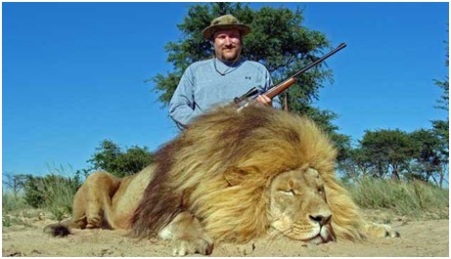
So often on social media I see friends who share posts degrading so called 'trophy hunting'. But why does this seem to be a bigger topic than the more common acts of animal cruelty carried out on a much larger scale? While thousands of exotic animals are hunted for sport each year, over a billion farm animals were killed in the UK alone in 2013, and worldwide it equals approximately 22 million animals every day. It doesn't stop at the number of deaths either, it seems the quality of life experienced by animals on a shooting range is far superior to any animal living in a factory farm. 

To recreate the hunting experience for punters, these animals are kept in their natural habitat with space to roam and express natural behaviours. Meanwhile, animals in factory farms are kept in dark, overcrowded sheds. Female cows spend their entire lives being forcefully impregnated to produce milk, while hens will often live in one shed with 125,000 other hens. Keeping 20,000 hens in one shed can even be classed as free range, providing they have occasional access to the outside.

Trophy hunting is known as such due to the way hunters will exhibit the animals they have killed. 
To shoot a zebra in a 'canned' hunting experience will cost you approximately £700, £10,000+ for a lion, and £35,000-£70,000 to shoot a rhino. After paying thousands of pounds these hunters will expect their moment of glory to be with a large, impressive animal. Breeders who wish to sell game to a hunting range will ensure that their animals are in top condition as this will increase their worth. However, when you are selling a £9 steak from a local pub, the customer will have no concern about the condition  of the animal before it was killed, cooked and served on a plate. They are not making such a large profit from this animal's life and will therefore spend less cash raising that animal for slaughter. 

Additional affects

Slaughterhouses do more than just house and slaughter animals. They are one of the largest causes of deforestation, pollution, and animal cruelty. Trophy hunting also does more harm than good, but the effects of housing billions of animals for food consumption has a much larger impact on the environment. Many people believe trophy hunting has a disastrous affect on endangered species without realising they are bred to be killed, just as farm animals are. In addition to this, their meat is nearly always used and is not wasted. These are not endangered animals being illegally poached. The addax antelope is an example of an animal which was near extinction but has been bred and kept alive by breeding for trophy hunting. 

I am in no way condoning hunting for sport, but we live in a society where we take it upon ourselves to judge other people before we look at ourselves. If you can condone the consumption of meat then surely you can not oppose the killing of the animal. Some people may believe that the cruelty of farms is necessary for food, however, in reality the enjoyment from consumption of meat is no more necessary than the thrill of hunting.