Showing posts with label trophy hunting. Show all posts

Thursday, 16 March 2017

White Lies

The White Tiger
Possible offspring
Ww carries the gene but does not exhibit traits
because it is a recessive gene
The white tiger is not an albino tiger or sub species of tiger. It is in fact a genetic variant of the Bengal tiger. The colouration of the white tiger is a result of a recessive gene being passed on from parent to offspring. This genetic mutation can also happen naturally but is incredibly rare. The gene results in a pale coat (some may have an orange tint) with black markings which would not be seen on an albino tiger. It also results in a blue colouration of the eyes, instead of the usual yellow/green seen in tigers. This occurs because the gene that is passed on from the parent inhibits the production of pheomelanin which produces orange/yellow colouration. However, it does allow the production of eumelanin which produces the dark stripes and results in the eyes being blue instead of red like an albino tiger. To pass on the white trait, both parents must carry the recessive gene. This means that despite the gene being found in one in every 15,000, not all of these tigers will display the white trait. This also means that both parents do not need to be white to produce white offspring. However, the only way to ensure that the offspring is white is to mate two white tigers together. 

Survival and Conservation
White tigers in captivity
Despite the fact that white tigers are incredibly rare, there is no conservation advantage of breeding them. The white colouration gives them a disadvantaged survival. These tigers are found in forest areas where they will no longer be able to camouflage with white fur. They have no natural predators but eat by stalking their prey and surprising it. With white fur they will find this much more difficult and as a solitary animal there are no other individuals to help them catch prey. White tigers are also much more valuable to hunters and are more likely to be shot or captured, especially when the are unable to hide. Tigers are already an endangered species, with a habitat that is constantly declining. No white tigers have been spotted in the wild in over 50 years, confirming their struggle to survive. The last one was supposedly shot in 1958. While zoos and exhibitors may say they are breeding these tigers for conservation, this simply isn't true as they can not be re-released into the wild due to their inability to survive. 

Inbreeding
Kenny - rescued white tiger
Lived to the age of 10
The American Zoological Association (AZA) has banned members from breeding white tigers due to the fact that they are bred for profit, not for conservation. Although this mutation was not caused by inbreeding, it is thought that severe inbreeding has been a result. White tigers are a huge attraction, allowing zoos and exhibitors to bring in more visitors and make more money. This has resulted in them inbreeding white tigers to ensure they produce white offspring which are more valuable. They have also been cross bred with Siberian tigers to produce a bigger cat, but once again not providing any conservation purpose. The first white tiger was captured in India in 1951 (only 7 years before the last white tiger was spotted). Some people believe that all white tigers are descendants from this tiger and are therefore all related/inbred. Although some have claimed there is no evidence to suggest white tigers are all inbred, many have been born with severe health issues such as kidney and spine problems, crossed eyes and cleft palettes. Some offspring may be born with the orange colouration but will still inherit these defects and these cubs will often be discarded as worthless. 


If these tigers are not bred in captivity it is likely that they will die out completely, as any that are produced naturally in the wild have such a struggle to survive against hunting, habitat loss and lack of camouflage. If these creatures can be kept in captivity without inbreeding, is it genetic diversity worth conserving?

Tuesday, 14 March 2017

Siberian / Amur Tiger

Panthera tigris altaica (endangered)
Image result for amur tiger
Amur (Siberian) tiger
Despite what is commonly thought, Siberian tigers are not the same as white tigers. Siberian tigers are also know as Amur tigers as they are mostly found in the Amur river valley in Russia. Amur tigers are mainly found in Eastern Russia, however, some can be found around the borders in China and North Korea. They live in boreal and temperate forest, consisting of coniferous trees such as birch. The temperature can drop as low as -45 degrees Celsius or -50 degrees Fahrenheit so they require a thicker, heavier coat than sub species such as Bengal and Indian. It is thought that there are only 450-550 left in the wild. They average as the largest cat on Earth (excluding the liger), males usually weigh up to 300kg while females are noticeably smaller at 180kg. They usually grow to around 3m in length. The largest Amur tiger was found in captivity at 3.9m in length. They have long legs and large paws which allows them to run up to 80km/ph. 

Image result for where is the amur tiger found
http://siberian-tigers.tumblr.com/page/2
Predation
They have no natural predators except for humans who account for 80% of Amur tiger deaths in the wild. They are killed for their pelts, for use in Chinese medicine or from fear. They rarely attack humans, however, this could be due to the fact that there are few left, so human contact is highly unlikely. They have a range of prey, from small animals such as rabbits and salmon, to large mammals such as moose, deer and wild boar. They have even been known to kill brown and black bears. They are hunters not scavengers but have been known to scavenge if the opportunity arises. They cover a larger area of land than other sub species as food is not as readily available in this habitat. They can eat up to 40kg (60lbs) of food in one sitting and are usually nocturnal.

Image result for amur tiger cub litter
Breeding
Like the majority of cat species, Amur tigers are solitary which means they prefer to live alone rather than in a group. Amur tigers will only be found together when  a mother is caring for her young or during mating season. They begin mating usually around 4 years old. Pregnancy will last about 103 days until the mother gives birth to a litter of 2-6 cubs. Cubs are born blind and can not hunt until they are 18 months old. They remain with the mother until they are 2-3 years of age. In the wild Amur tigers will live for 10-15 years which is about the average life span of most big cats. 


Siberian Tiger Youtube Video: https://www.youtube.com/watch?v=Sq1eUtdpefs&t=17s

Wednesday, 17 February 2016

Trophy Hunting vs Factory Farming

A brief comparison

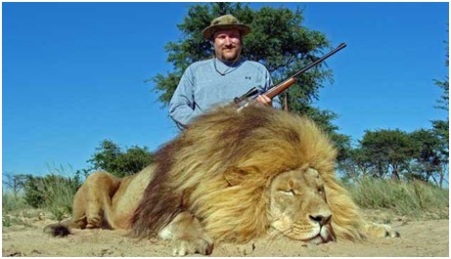
So often on social media I see friends who share posts degrading so called 'trophy hunting'. But why does this seem to be a bigger topic than the more common acts of animal cruelty carried out on a much larger scale? While thousands of exotic animals are hunted for sport each year, over a billion farm animals were killed in the UK alone in 2013, and worldwide it equals approximately 22 million animals every day. It doesn't stop at the number of deaths either, it seems the quality of life experienced by animals on a shooting range is far superior to any animal living in a factory farm. 

To recreate the hunting experience for punters, these animals are kept in their natural habitat with space to roam and express natural behaviours. Meanwhile, animals in factory farms are kept in dark, overcrowded sheds. Female cows spend their entire lives being forcefully impregnated to produce milk, while hens will often live in one shed with 125,000 other hens. Keeping 20,000 hens in one shed can even be classed as free range, providing they have occasional access to the outside.

Trophy hunting is known as such due to the way hunters will exhibit the animals they have killed. 
To shoot a zebra in a 'canned' hunting experience will cost you approximately £700, £10,000+ for a lion, and £35,000-£70,000 to shoot a rhino. After paying thousands of pounds these hunters will expect their moment of glory to be with a large, impressive animal. Breeders who wish to sell game to a hunting range will ensure that their animals are in top condition as this will increase their worth. However, when you are selling a £9 steak from a local pub, the customer will have no concern about the condition  of the animal before it was killed, cooked and served on a plate. They are not making such a large profit from this animal's life and will therefore spend less cash raising that animal for slaughter. 

Additional affects

Slaughterhouses do more than just house and slaughter animals. They are one of the largest causes of deforestation, pollution, and animal cruelty. Trophy hunting also does more harm than good, but the effects of housing billions of animals for food consumption has a much larger impact on the environment. Many people believe trophy hunting has a disastrous affect on endangered species without realising they are bred to be killed, just as farm animals are. In addition to this, their meat is nearly always used and is not wasted. These are not endangered animals being illegally poached. The addax antelope is an example of an animal which was near extinction but has been bred and kept alive by breeding for trophy hunting. 

I am in no way condoning hunting for sport, but we live in a society where we take it upon ourselves to judge other people before we look at ourselves. If you can condone the consumption of meat then surely you can not oppose the killing of the animal. Some people may believe that the cruelty of farms is necessary for food, however, in reality the enjoyment from consumption of meat is no more necessary than the thrill of hunting.