Showing posts with label animals. Show all posts

Friday, 7 July 2017

The Immortal Jellyfish

Turritopsis dohrnii (not classified on the IUCN red list)

Although the species T. dohrnii was first discovered in 1883, its amazing ability to regenerate was not discovered until the 1990s. The immortal jellyfish was formally thought to be the Turritopsis nutricula, a similar but different species of jellyfish. The 'immortal jellyfish' is now classified as Turritopsis dohrnii, which is mainly found in the Mediterranean sea and the oceans surrounding Japan. The species is now being found more widely around the planet as they travel long distances by attaching themselves to cargo ships. Their preferred temperature is water around 22 degrees celcius, however, they are also found in colder water. They are made up of a clear bell-shaped structure filled with jelly. They have a bright red stomach which can be seen from the outside. This looks like a red cross from underneath. 
Red stomach cross-section
Once fully grown they are still incredibly small at 4.5mm in diameter and are only just visible without the use of a microscope. The first article published on the amazing ability of the immortal jellyfish classified it as a Turritopsis nutricula however this was corrected later on. The dohrnii has many similar features and genetic code to the T. nutricular and T. rubra. It has yet to be proven that these species also have the ability to 'regenerate' but it is thought that this could be possible. The dohrnii have nematocysts (also known as cnidoblasts or cnidocytes) on the tentacles which allow it to immobilise its prey before eating. These will not immobilise humans, but will cause a sting. Unlike other species, such as the box jellyfish, the dohrnii sting in not venomous. Jellyfish do not have a heart, brain or bones but the T. dohrnii do have light-sensitive receptors which allow it to detect light from the surface, helping it to recognise up and down directions.

The regeneration process
The process that the jellyfish undergoes to sustain its 'immortality' is known as transdifferentiation. Transdifferentiation is a type of metaplasia cell transformation which allows one type of specialised cell to turn into another. Although this process is found in other animal species such as newts, it is no where near as specialised as the process which occurs in the immortal jellyfish. The lens cells in the eye of a newt can become damaged. When this happens an iris cell within the eye can change into a stem cell. Stem cells have the ability to replicate any other cell and can then revert into a lens cell to replace the damaged/missing ones. In the immortal jellyfish, cells change directly into the required cell. The jellyfish can carry out this process in its entire being whereas a newt can not carry out differentiation in every cell of its body. The immortal jellyfish can even convert muscle cells into nerve or reproduction cells. 

 - Reproduction
The jellyfish are first born when a male ejaculates sperm into the water and some find their way into a female by chance. The fertilised eggs will stay on the surface of the female until they release free-swimming larvae known as planula
 - Planula
These planula have tiny cilia (hair-like structures) along their surface which allows a minimal amount of propulsion, but not enough for them to swim against currents.They will drift/swim through the water until they land on a firm surface such as the ocean floor or a rock. It will then anchor itself to this surface and transform into a polyp
 - Polyps
Polyp Stage
Polyps are cylindrical-shaped, stalk-like structures. They feed on small organisms such as zooplankton and plankton. Polyps use asexual reproduction to multiply. Eventually the polyps grow into a branch-like structure where the colony acts as a single organism (also known as hydroids). Polyps can live for 5 years and will eventually develop buds at its tips which will develop into medusae.
 - Medusae
The jellyfish that form from the buds of the polyps are also known as medusae. When the medusa buds off from the polyp it is only 1mm in diameter with just 8 tentacles. Once they are fully matured they are still incredibly small at about 4.5mm in diameter but they have 80-90 tentacles. It takes them about 2-4 weeks from budding to reach maturity. They will feed on plankton, tiny molluscs, larvae and fish eggs. 
 - Stimuli
The medusa will not automatically begin the regeneration process at sexual maturity. During its medusa stage the jellyfish may be exposed to environmental stress, injury, starvation, or it will eventually reach old age. This will stimulate the regeneration process. 
 - Retraction
Once the process is initiated, the medusa tentacles will retract and its body will begin to shrink in size. It will then drop down to the ocean floor and attach itself to a firm surface as a polyp again. The jellyfish then begins to mature all over again from the polyp stage. 


Transdifferentiation Cycle
Could these cells benefit humans?
A man named Shin Kubota is an associate professor at the Kyoto University in Japan, who has dedicated his life to studying the immortal jellyfish. These jellyfish are incredibly difficult to keep in captivity due to the fact that they have to be hand fed, given clean water daily, and must be constantly monitored. Shin Kubota is currently the only person who has managed to keep these jellyfish in captivity for a prolonged period of time. This species has inspired some scientists to research a new method of using stem cells to replace damaged cells, such as cancer cells, in humans. These jellyfish are more genetically similar to humans than simplistic species such as insects or worms. Despite this, the jellyfish are still a primitive species in comparison to humans. Without a brain, heart or bones it is much easier for these cells to perform transdifferentiation. We can not even be sure whether this process is possible in these organs. The process would not allow humans to revert back to the stage of being a baby but could be used in small collections of cells to repair damage. Overall, the structure of polyps and medusae are incredibly different to that of humans and this process is almost certainly not going to be seen in the near future. 

Are they immortal or just clones?
Although this process is described as 'immortality' it is actually closer to a cloning system that allows the jellyfish to replicate itself continuously, thus creating the possibility for immortality. It does not protect the species against other causes of death such as predation. This process can only be carried out during the medusa stage of life. Therefore, the species can die like any other animal from injury or disease during the polyp stage. 
The regeneration process has only been witnessed in captive jellyfish and never in the wild. This could suggest that it does not occur in their natural environment, however, 100% of specimens in captivity demonstrated the regenerative ability. Kubota stated that in two years, his colony re-birthed itself 11  times. The process is quite rapid, going from medusa to polyp in just three days. These jellyfish are so difficult to see that it is unlikely to observe them at the right time outside of captivity. They are likely to succumb to predation or disease during the polyp stage and are therefore highly unlikely to survive forever. They will be preyed upon by fish species such as tuna as well as other, larger species of jellyfish. Rebecca Helm from DeepSeaNews said that it is possible new clones may become more fragile from errors when copying the genetic code during the polyp stage. Mutations and errors in genetic code can occur during reproduction which could build up over time, causing the specimen to become weaker. It may eventually reach a stage where it can no longer complete the regeneration process, rendering it mortal after a certain life span. Due to the large number of varying factors and lack of observational research, it is impossible to determine an accurate lifespan for this species. 


More information:
-http://immortal-jellyfish.com/
-https://www.youtube.com/watch?v=2kLSiE-eNjw
-https://www.rsb.org.uk/membership/individual-membership/158-biologist/features/1510-everlasting-life-the-immortal-jellyfish


Thursday, 16 March 2017

White Lies

The White Tiger
Possible offspring
Ww carries the gene but does not exhibit traits
because it is a recessive gene
The white tiger is not an albino tiger or sub species of tiger. It is in fact a genetic variant of the Bengal tiger. The colouration of the white tiger is a result of a recessive gene being passed on from parent to offspring. This genetic mutation can also happen naturally but is incredibly rare. The gene results in a pale coat (some may have an orange tint) with black markings which would not be seen on an albino tiger. It also results in a blue colouration of the eyes, instead of the usual yellow/green seen in tigers. This occurs because the gene that is passed on from the parent inhibits the production of pheomelanin which produces orange/yellow colouration. However, it does allow the production of eumelanin which produces the dark stripes and results in the eyes being blue instead of red like an albino tiger. To pass on the white trait, both parents must carry the recessive gene. This means that despite the gene being found in one in every 15,000, not all of these tigers will display the white trait. This also means that both parents do not need to be white to produce white offspring. However, the only way to ensure that the offspring is white is to mate two white tigers together. 

Survival and Conservation
White tigers in captivity
Despite the fact that white tigers are incredibly rare, there is no conservation advantage of breeding them. The white colouration gives them a disadvantaged survival. These tigers are found in forest areas where they will no longer be able to camouflage with white fur. They have no natural predators but eat by stalking their prey and surprising it. With white fur they will find this much more difficult and as a solitary animal there are no other individuals to help them catch prey. White tigers are also much more valuable to hunters and are more likely to be shot or captured, especially when the are unable to hide. Tigers are already an endangered species, with a habitat that is constantly declining. No white tigers have been spotted in the wild in over 50 years, confirming their struggle to survive. The last one was supposedly shot in 1958. While zoos and exhibitors may say they are breeding these tigers for conservation, this simply isn't true as they can not be re-released into the wild due to their inability to survive. 

Inbreeding
Kenny - rescued white tiger
Lived to the age of 10
The American Zoological Association (AZA) has banned members from breeding white tigers due to the fact that they are bred for profit, not for conservation. Although this mutation was not caused by inbreeding, it is thought that severe inbreeding has been a result. White tigers are a huge attraction, allowing zoos and exhibitors to bring in more visitors and make more money. This has resulted in them inbreeding white tigers to ensure they produce white offspring which are more valuable. They have also been cross bred with Siberian tigers to produce a bigger cat, but once again not providing any conservation purpose. The first white tiger was captured in India in 1951 (only 7 years before the last white tiger was spotted). Some people believe that all white tigers are descendants from this tiger and are therefore all related/inbred. Although some have claimed there is no evidence to suggest white tigers are all inbred, many have been born with severe health issues such as kidney and spine problems, crossed eyes and cleft palettes. Some offspring may be born with the orange colouration but will still inherit these defects and these cubs will often be discarded as worthless. 


If these tigers are not bred in captivity it is likely that they will die out completely, as any that are produced naturally in the wild have such a struggle to survive against hunting, habitat loss and lack of camouflage. If these creatures can be kept in captivity without inbreeding, is it genetic diversity worth conserving?

Tuesday, 14 March 2017

Siberian / Amur Tiger

Panthera tigris altaica (endangered)
Image result for amur tiger
Amur (Siberian) tiger
Despite what is commonly thought, Siberian tigers are not the same as white tigers. Siberian tigers are also know as Amur tigers as they are mostly found in the Amur river valley in Russia. Amur tigers are mainly found in Eastern Russia, however, some can be found around the borders in China and North Korea. They live in boreal and temperate forest, consisting of coniferous trees such as birch. The temperature can drop as low as -45 degrees Celsius or -50 degrees Fahrenheit so they require a thicker, heavier coat than sub species such as Bengal and Indian. It is thought that there are only 450-550 left in the wild. They average as the largest cat on Earth (excluding the liger), males usually weigh up to 300kg while females are noticeably smaller at 180kg. They usually grow to around 3m in length. The largest Amur tiger was found in captivity at 3.9m in length. They have long legs and large paws which allows them to run up to 80km/ph. 

Image result for where is the amur tiger found
http://siberian-tigers.tumblr.com/page/2
Predation
They have no natural predators except for humans who account for 80% of Amur tiger deaths in the wild. They are killed for their pelts, for use in Chinese medicine or from fear. They rarely attack humans, however, this could be due to the fact that there are few left, so human contact is highly unlikely. They have a range of prey, from small animals such as rabbits and salmon, to large mammals such as moose, deer and wild boar. They have even been known to kill brown and black bears. They are hunters not scavengers but have been known to scavenge if the opportunity arises. They cover a larger area of land than other sub species as food is not as readily available in this habitat. They can eat up to 40kg (60lbs) of food in one sitting and are usually nocturnal.

Image result for amur tiger cub litter
Breeding
Like the majority of cat species, Amur tigers are solitary which means they prefer to live alone rather than in a group. Amur tigers will only be found together when  a mother is caring for her young or during mating season. They begin mating usually around 4 years old. Pregnancy will last about 103 days until the mother gives birth to a litter of 2-6 cubs. Cubs are born blind and can not hunt until they are 18 months old. They remain with the mother until they are 2-3 years of age. In the wild Amur tigers will live for 10-15 years which is about the average life span of most big cats. 


Siberian Tiger Youtube Video: https://www.youtube.com/watch?v=Sq1eUtdpefs&t=17s

Friday, 11 November 2016

The Not-So-Grand National

The Aintree Grand National began in 1839 and has since become the largest annual horse race in Britain and arguably in Europe. Between 500 and 600 million people across 140 countries tune in each year to watch. The course is over 4 miles long and requires the 40 horses to make it over 30 jumps (14 twice and 2 once). The most famous of these jumps is Beecher's Brook which is described as both the most 'thrilling' and the most 'dangerous' jump in the world. 

Safety Measures

In the time that the Grand National has begun, a number of safety measurements have been put in place in an attempt to decrease the risk of injury to horses as well as jockeys. The Grand National is considered five times more deadly than any other horse race. Less than 40% have finished the race in the past 10 years and there have been at least 79 deaths in total. After the 2011 race resulted in the deaths of three horses, and jockey Peter Toole in a coma, two jumps were reduced in height. In addition to this, the landing ground of the first jump was levelled to reduce the risk of horses falling. However, Ginger McCain (jockey and horse trainer) stated that increasing safety in this way had inadvertently resulted in the race becoming more dangerous by enabling the horses to go faster. In 2013, further safety measures were implemented by using softer materials for the fences, a new bypass to catch riderless horses, reducing the length of the track, and more. Since 2013 no horses have died during the main Grand National race. 

Horse Welfare

Despite this, five horses died this year during other parts of the Grand National festival which takes place across three days. During  the main race a total of 16/39 horses made it across the finish line. This is less than the year before (2015) which ended with 19/39 horses finishing, and the year before that (2014) when 18/40 horses finished the race. This is a total of 44.9% finishing the race in the past 3 years. The highest number of horses to ever complete the Grand Nation was in 1984 when 23/40 horses finished. One horse named Earthstopper collapsed and died after finishing the race in fifth place, but no horses died due to falling injuries. 
Image result for grand national 2016
Metro 2016
Grand National
'Four horses dead in the first two days'


Horses will often be exhausted after racing; for example the winning horse in 2011, Ballabrigs, had to be given oxygen after the race. The rider, Jason Maguire, was given a 5 day ban for whipping too many times and causing physical injury to the hind leg, he still kept the winning title and £535,135 prize money. Many claim that horses do not feel the effect of the whip and are simply encouraged to run faster due to the sound of the crack. However, horses are in fact extremely sensitive to touch and can 'easily feel a fly landing on its skin' according to the RSPCA. This is demonstrated by the cutaneous trunci muscle reflex. 

In October 2011 the BHA instated stricter whipping regulations by increasing minimum punishment from a caution to a 5 day ban with increasing measures for repeat offenders. In addition to this, they decided to nearly half the number of times a horse can be whipped throughout the race. They also initiated mandatory financial penalties to any jockey who received a 3 day or more suspension. This would have cost Jason Maguire around £40,000 according to the BBC. The BHA refused to disqualify rule-breakers as this would also penalise the horse owners, trainers, stable staff and punters. Tim Morris of the BHA explained that the whip was still necessary and could not be banned as it is required to 'steer, correct its stride, and balance a horse'.


The 2014 Grand National saw the death of horse 'Our Conor' who was sold for 1 million euros the year before. Despite this, he was later describer as 'replaceable' by jockey Ruby Walsh. In an interview with Radio Times in 2013 Katie Walsh claimed that the race horses are cared for 'better than some children' but then later said 'these things happen and they're horses at the end of the day'. Every year thousands of horses are either discarded, or auctioned off to slaughterhouses as they no longer have a purpose when they can not race. Often it is not seen as a worthwhile investment to pay for vets bills, however, in 2011 The Guardian published an article explaining why a broken leg can indeed be fatal to a horse and can not always be treated. 


Health problems

Horses will usually begin their training around one and a half years old. By this time they are old enough to be sent to slaughter if they do not perform as expected. At this age their skeletal structure is still developing and putting a horse through extensive training during this time can lead to extensive damage, particularly to the spine and legs. 

During races, horses can be pushed to their physical limits, resulting in a number of health issues. A study carried out at the University of Melbourne found 50% of racehorses had blood in the windpipe and 90% had blood deeper in the lungs, also known as exercise-induced pulmonary hemorrhage (EHIP). Racing at such high speeds can cause horses to rupture blood vessels, sometimes resulting in a nosebleed. A study carried out in Sydney found stomach ulcers in 90% of race horses. 
Image result for crib biting
www.vetstream.com/equis/content/
disease/dis00067

Horses are natural grazers and therefore their stomachs are constantly producing hydrochloric acid for digestion. However, when horses are not turned out to pasture their stomachs are still producing the acid and digestive enzymes. Without any food in the stomach this can go on to damage the lining of the stomach, resulting in ulcers. Horses that spend more time grazing or are given hay/straw as feed in a stable are shown to be less prone to stomach ulcers.This shows horses should be able to carry out their natural behaviours for health reasons. Horses are social animals but are unfortunately too often kept for long periods of isolation in the racing industry. This can cause them to develop neurotic behaviours such as
crib biting, swaying or self mutilation


Conclusion

The Independent newspaper predicts that horse racing contributes around £3.45 billion to the economy and provides approximately 6,000 jobs to care for the 14,000 horses in training. In 2016, £250 million was predicted to be wagered on the Grand National. With such a large amount of money involved it is extremely unlikely that the government will ever decide that the Grand National is no longer an acceptable use of animals. However, as more information is revealed about the horse racing industry it is possible that people will decide to spend their money on a worthier cause. 

Thursday, 11 August 2016

Micro Pig Management

Over the past few years, micro/miniature animals have become increasingly popular - particularly the micro pig. Micro pigs are not a specific breed of pig but are in actual fact just potbellied pigs selectively bred to become smaller. At a first glance pigs seem to be great pets; they are intelligent, affectionate, adorable, and despite their reputation are actually quite hygienic animals. They can even be litter trained and taken for walks.

Legislation

However, before owning any breed of pig it is important to research the legal requirements. Even if they are kept as a pet, any breed of pig is considered livestock and therefore owners must obey specific laws for owning livestock. Firstly the owner will need to register the living area for the pig and will be given a CPH number. They will then need to register the arrival of the pig within 30 days. The pig must have an ID tag or tattoo to prove that is has been registered. To move the pig (including for walking) you must acquire a licence and a walking route will be agreed. After the pig has returned to its premises it (or any other pig on the property) must not be moved for 20 days.  
 
Micro pigs can not travel in a car, they must be placed in transportation specifically designed under the Welfare of Animals (Transport) Order 2006. This must be washed and disinfected after use to prevent the spread of diseases such as Swine Vesicular Disease and Foot and Mouth. If the pig becomes unwell a vet needs be called to the place of residence, pigs should not be taken into a veterinary surgery. 

Health Problems

Owners should be aware of the zoonotic diseases that can be transmitted between humans and pigs. This includes Erysipeloid and Streptococcus suis. The latter can result in meningitis and even deafness if not treated. Pigs are also prone to Salmonella infections such as Enterocolitis  which can be contracted from animal faeces and other pigs. Some micro pigs may be severely inbred to produce the smallest pigs as quickly and cheaply as possible. This can result in serious health problems, similar to pedigree dogs. 

It is good to keep in mind when getting a miniature pig that you can not guarantee how big it will grow. Some idea can be gained from looking at the parents but pigs can begin breeding several weeks after birth so the parents may not be fully grown. It is therefore important to only get one if you are sure you will be able to look after it no matter what size it becomes. They also prefer the company of at least one other pig and will need space to root, dig and wallow in wet mud. If not stimulated properly they will become destructive and even aggressive. This is not to say that pigs can not make great pets but they are lots or hard work and should not be bought purely based on their 'adorable' appeal.


Wednesday, 17 February 2016

Trophy Hunting vs Factory Farming

A brief comparison

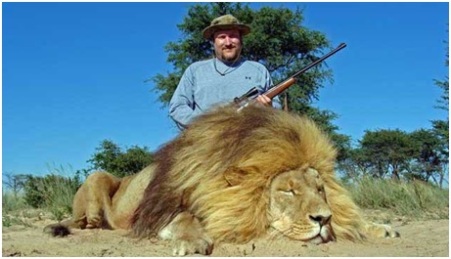
So often on social media I see friends who share posts degrading so called 'trophy hunting'. But why does this seem to be a bigger topic than the more common acts of animal cruelty carried out on a much larger scale? While thousands of exotic animals are hunted for sport each year, over a billion farm animals were killed in the UK alone in 2013, and worldwide it equals approximately 22 million animals every day. It doesn't stop at the number of deaths either, it seems the quality of life experienced by animals on a shooting range is far superior to any animal living in a factory farm. 

To recreate the hunting experience for punters, these animals are kept in their natural habitat with space to roam and express natural behaviours. Meanwhile, animals in factory farms are kept in dark, overcrowded sheds. Female cows spend their entire lives being forcefully impregnated to produce milk, while hens will often live in one shed with 125,000 other hens. Keeping 20,000 hens in one shed can even be classed as free range, providing they have occasional access to the outside.

Trophy hunting is known as such due to the way hunters will exhibit the animals they have killed. 
To shoot a zebra in a 'canned' hunting experience will cost you approximately £700, £10,000+ for a lion, and £35,000-£70,000 to shoot a rhino. After paying thousands of pounds these hunters will expect their moment of glory to be with a large, impressive animal. Breeders who wish to sell game to a hunting range will ensure that their animals are in top condition as this will increase their worth. However, when you are selling a £9 steak from a local pub, the customer will have no concern about the condition  of the animal before it was killed, cooked and served on a plate. They are not making such a large profit from this animal's life and will therefore spend less cash raising that animal for slaughter. 

Additional affects

Slaughterhouses do more than just house and slaughter animals. They are one of the largest causes of deforestation, pollution, and animal cruelty. Trophy hunting also does more harm than good, but the effects of housing billions of animals for food consumption has a much larger impact on the environment. Many people believe trophy hunting has a disastrous affect on endangered species without realising they are bred to be killed, just as farm animals are. In addition to this, their meat is nearly always used and is not wasted. These are not endangered animals being illegally poached. The addax antelope is an example of an animal which was near extinction but has been bred and kept alive by breeding for trophy hunting. 

I am in no way condoning hunting for sport, but we live in a society where we take it upon ourselves to judge other people before we look at ourselves. If you can condone the consumption of meat then surely you can not oppose the killing of the animal. Some people may believe that the cruelty of farms is necessary for food, however, in reality the enjoyment from consumption of meat is no more necessary than the thrill of hunting.